Pick n Pack experiment
Cutting paper waste in Reece's specialist trade stores by moving the pick-and-pack flow off printed slips and onto the phones staff already carry.
As part of the Point of Sale project, the business wanted to improve its in-store sales flow. Reece stores are specialised trade stores: staff take customers' orders over the counter, then pick and pack the goods themselves.
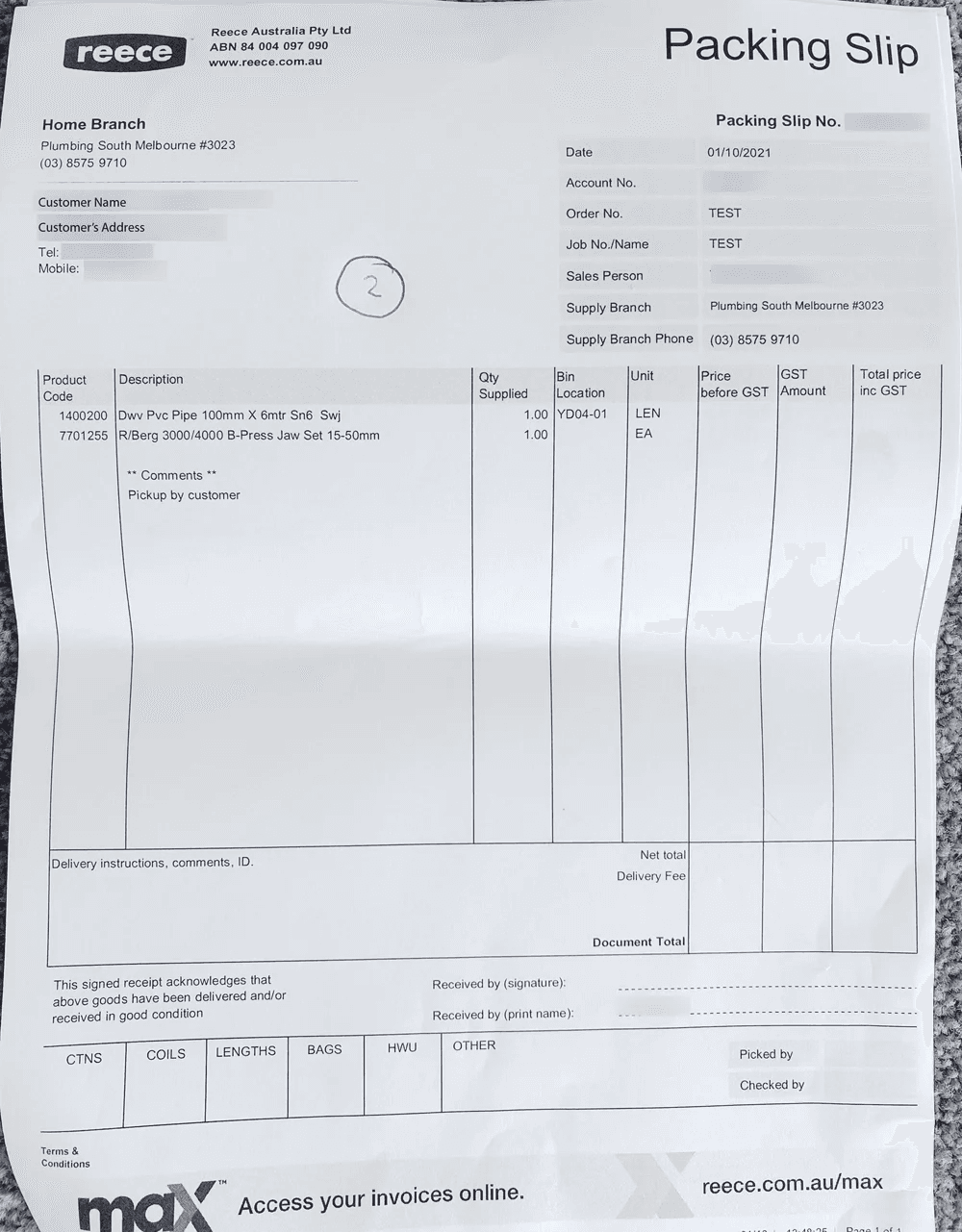
To do that, they relied on printed pick-slips to locate and identify the goods: a slip for every order, printed whether anyone needed it or not.
The problem
Reece was using roughly 2.2 million sheets of paper and 300 toner cartridges every month. As part of their ‘War on Waste’ initiative, cutting unnecessary printing became a priority.
Through in-store observations and staff feedback, we found that most packing slips were discarded immediately: customers rarely wanted them, and experienced staff often didn't need them. But the system gave no option to skip printing.
The approach
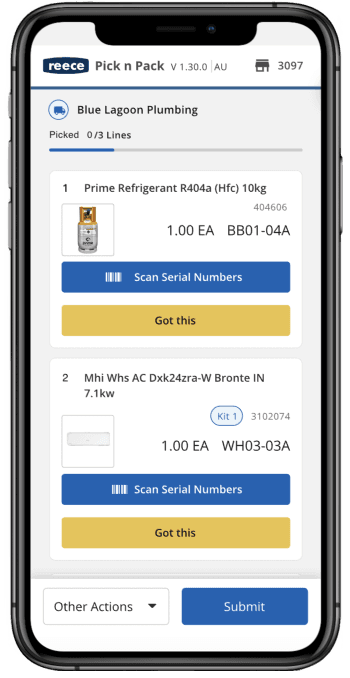
Mobility is everything for store staff, and we needed to cut paper. Mobile phones were a feasible answer: each store was already supplied with a few for other tasks.
The team and I formed an assumption: picking and packing on a phone would reduce paper waste significantly. I quickly designed a high-fidelity prototype to test it, leaning on the existing Point of Sale mobile components and building the interaction in ProtoPie.
Worth naming the decision inside that: we could have gone straight to scoping a build. I pushed to spend a couple of weeks and a handful of wristbands first, because the risky assumption was never the software. It was whether hands-free hardware fits how staff actually move.
The test
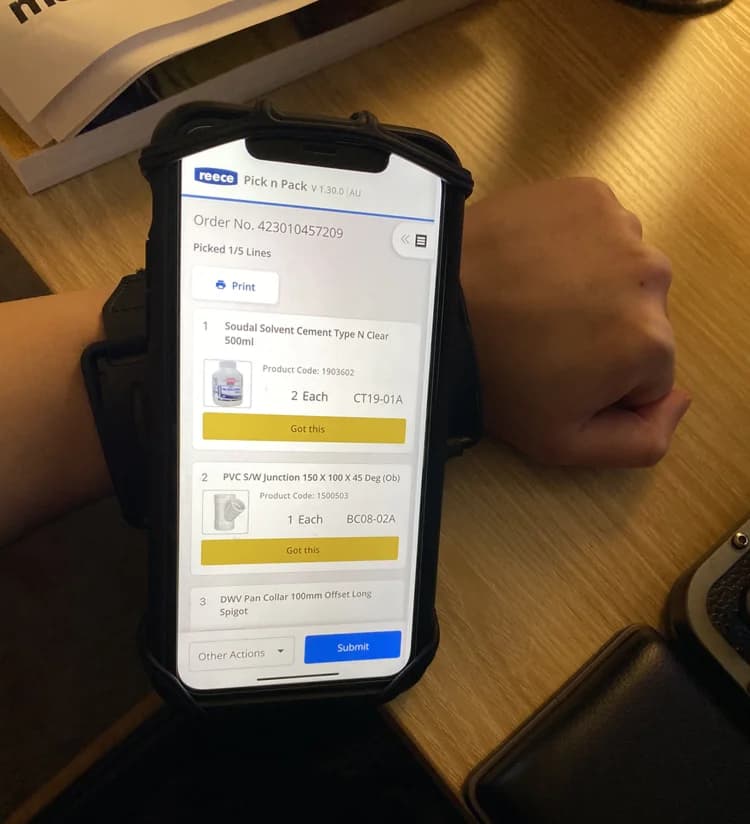
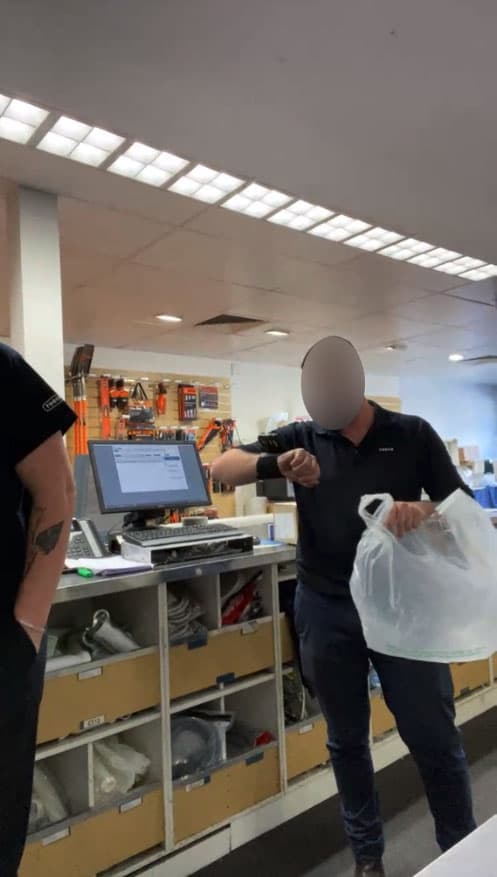
To validate the assumption hands-on, I added a wristband so staff could wear the phone and keep both hands free while picking. The prototype was tested over multiple rounds across different stores.
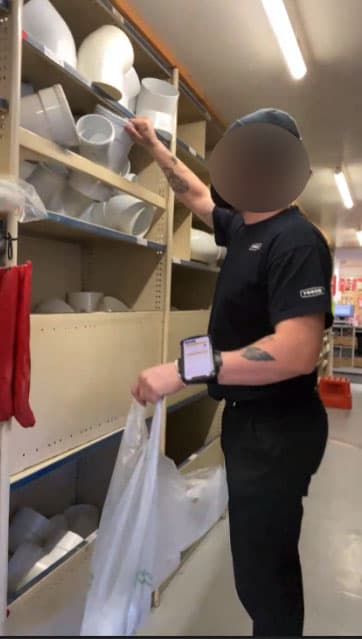
These ran at the tail end of the COVID lockdowns, so I designed them to work remotely: I asked selected branches for two staff members and two phones. One ran the prototype in-store, the other joined an MS Teams call so we could observe live. Ahead of each session I dropped off the wristbands and coordinated the logistics, invites and observers.
What we heard
We got plenty of feedback. Branch staff didn't love the wristband: it got in the way when they needed to move fast, and maneuvering it around tight spaces risked damaging the device. The hardware was wrong, but the direction was right: digitising the flow was clearly the way to save paper.
The wristband is clunky and would get in the way.
This would save a lot of paper.
The outcome
An honest one: based on the experiment and the feedback, pick and pack on a phone with a wristband is a fail. Staff wanted the digitised flow (the paper savings were never in question), but the hardware got in the way of how they actually move through a store.
- A phone on a wristbandGot in the way
- Tight spacesRisked the device
- Digitise the pick-and-pack flowStaff wanted it
- The paper savingsNever in question
The experiment's scoreboard: form factor disproved, direction proved, before anything was built.
That's the experiment doing its job. For the cost of a prototype and a few wristbands, we proved the direction and disproved the form factor before anything was built. What it leaves behind is a clearer brief: more exploration and investigation into hardware that supports staff workflow without getting in the way.