Reece Point of Sale
Three months of discovery across 56 branches in Australia and New Zealand, then collapsing Reece's three ageing point-of-sale apps into one flexible tool branch staff could actually learn.
Reece is known in Australia for bathroom and plumbing, with 600+ stores across Australia and New Zealand, and a reach into heating, cooling, refrigeration and more. I joined the Next Gen POS project, set up to replace a very old point-of-sale system that was actually three separate apps: one for direct transactions over the counter, one for quoting, and one for pre-orders, items a store didn't have in stock. Folding all three into a single tool made this a behemoth of a project.
The team had looked at off-the-shelf solutions first; none of them could support the way Reece actually works.
Three months of discovery
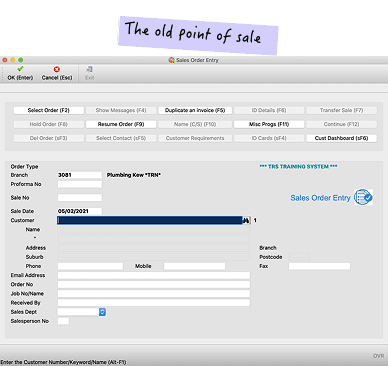
Three months, four research activities. I visited 14 branches across different business units to watch staff use the system on real customers: observing, photographing, asking the occasional follow-up. Then I moved the deeper conversations remote between COVID lockdowns, deliberately covering every unit.
To widen the net I piggybacked a POS question onto an existing satisfaction survey (41 responses), and ran my favourite activity: a “TRS Hack Competition.” I'd noticed staff had little workarounds (cheatsheets, sketches) they no longer even registered as hacks, so I opened it up as a competition through Regional Leaders, the intranet and the newsletter. It pulled 214 responses, 37 of them direct feedback, and showed just how differently each business unit works.
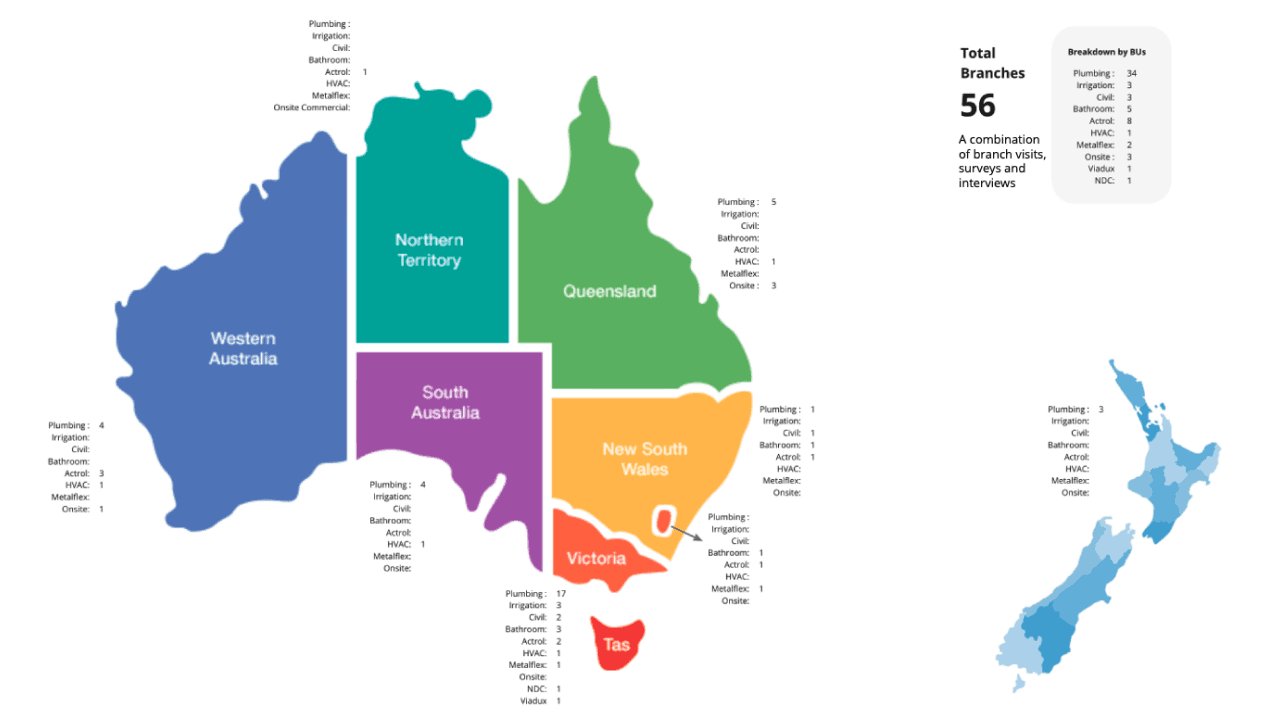
Key findings
A few things came through clearly: the system wasn't flexible enough for how differently each unit works, the learning curve was brutal (staff said product search alone took six to twelve months to master), and branch staff live on the keyboard. Shortcuts matter enormously.
Plus nuggets I couldn't have guessed: states use different words for the same product, New Zealand orders by product code, and a few units with no delivery fleet of their own had resorted to Uber to get parts to customers. From there I mapped the end-to-end retail journey, setting aside the units that don't sell retail.
The design
With the research behind me, I started with a concept design to explore the ideal world: a vision that captured everything we wanted, that we could then scale back from. It paired a customer-facing screen and scanner, so people could identify themselves, with the POS screen the branch operates.
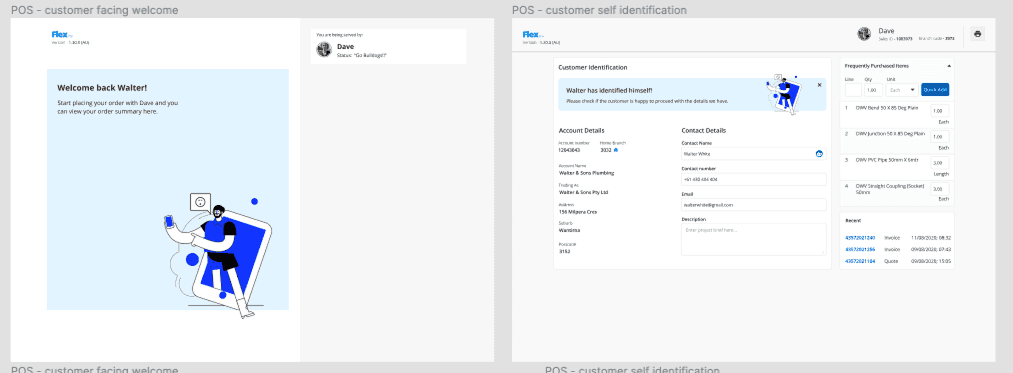
The customer-facing screen didn't survive, and cutting it was the right call. It meant new hardware at every counter, and the business wasn't ready for that spend or the learning and development that comes with it. The concept had done its job anyway: it set the ceiling, and gave us something concrete to scale back from on purpose rather than by accident.
From there I combined the three apps into one, with the flexibility to move between processing a transaction, adjusting pricing, and creating purchase or draft orders, freeing branch staff up to spend more time actually helping customers. I prototyped, took the designs into branches for feedback, and ran unmoderated Maze tests with links sent out to more branches, collecting and analysing everything in Trello. I deliberately tested across three groups: under 12 months with Reece (for learnability), 2–5 years (comfortable existing users), and 10+ years (the super-senior users who aren't always open to change).
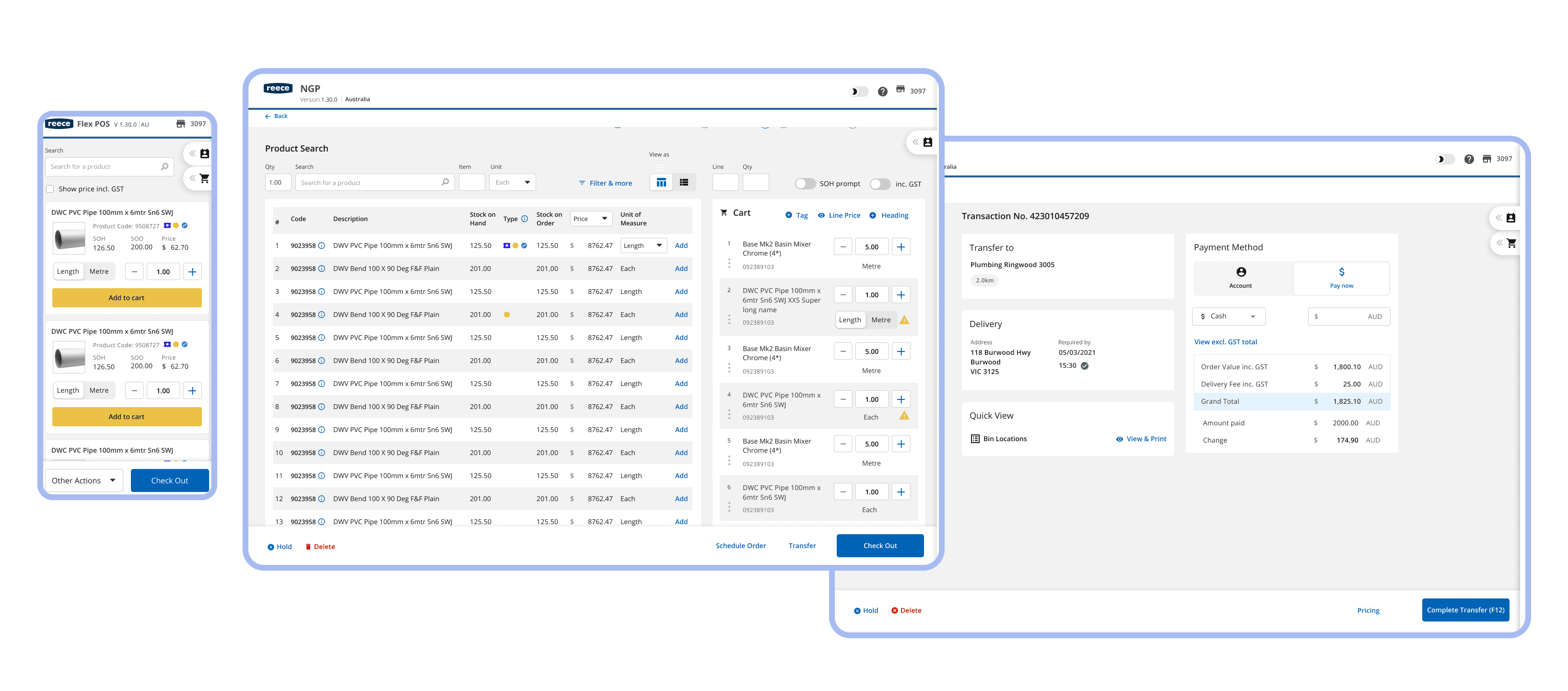
The whole thing ran as a cycle (gather feedback, iterate, repeat), working closely with our BA and front-end developers through card kickoffs and walkthroughs to stay aligned.
Where it landed
The Next Gen POS shipped and became the system branches run on, retiring the three legacy apps it replaced. It's an internal tool, so adoption is total by definition. The harder, realer win was getting one system flexible enough to serve business units that operate nothing alike, and learnable enough that product search no longer takes the better part of a year to master.
- Counter transactionsProduct search · 6–12 months
- Quoting
- Pre-orders
- Next Gen POSTransactions, quotes & orders
- Every branch, Australia and New Zealand
Three ageing apps folded into the one flexible tool branches run on today.
What I learned
I'd start smaller and move quicker. The work went out across three slices, but each was still a big release; next time I'd push back on that and get a thinner slice in front of branch staff sooner: faster real feedback, and far less risk to stores' day-to-day trading while we learn.